Theory of Knowledge Students Engage Cincinnati Mayor in Thought-Provoking Discussion
July 9, 2026
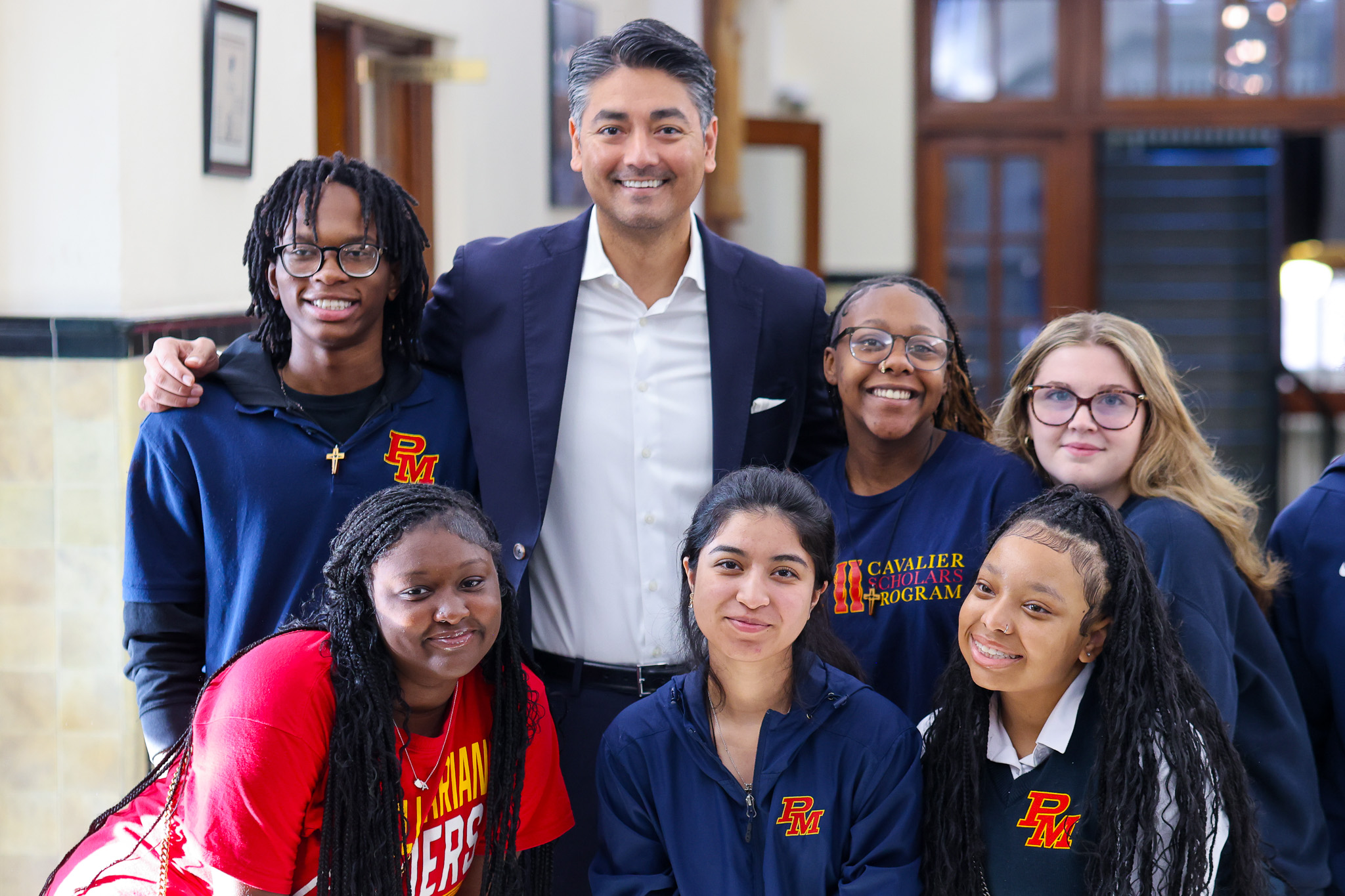
Purcell Marian students in the International Baccalaureate (IB) Theory of Knowledge (TOK) course welcomed Cincinnati Mayor Aftab Pureval for an engaging classroom conversation on April 17, 2026. Hosted by TOK instructor Mr. Lyle Greer, the visit provided students with a unique opportunity to explore how knowledge, perspective, leadership, and decision-making intersect in public life.
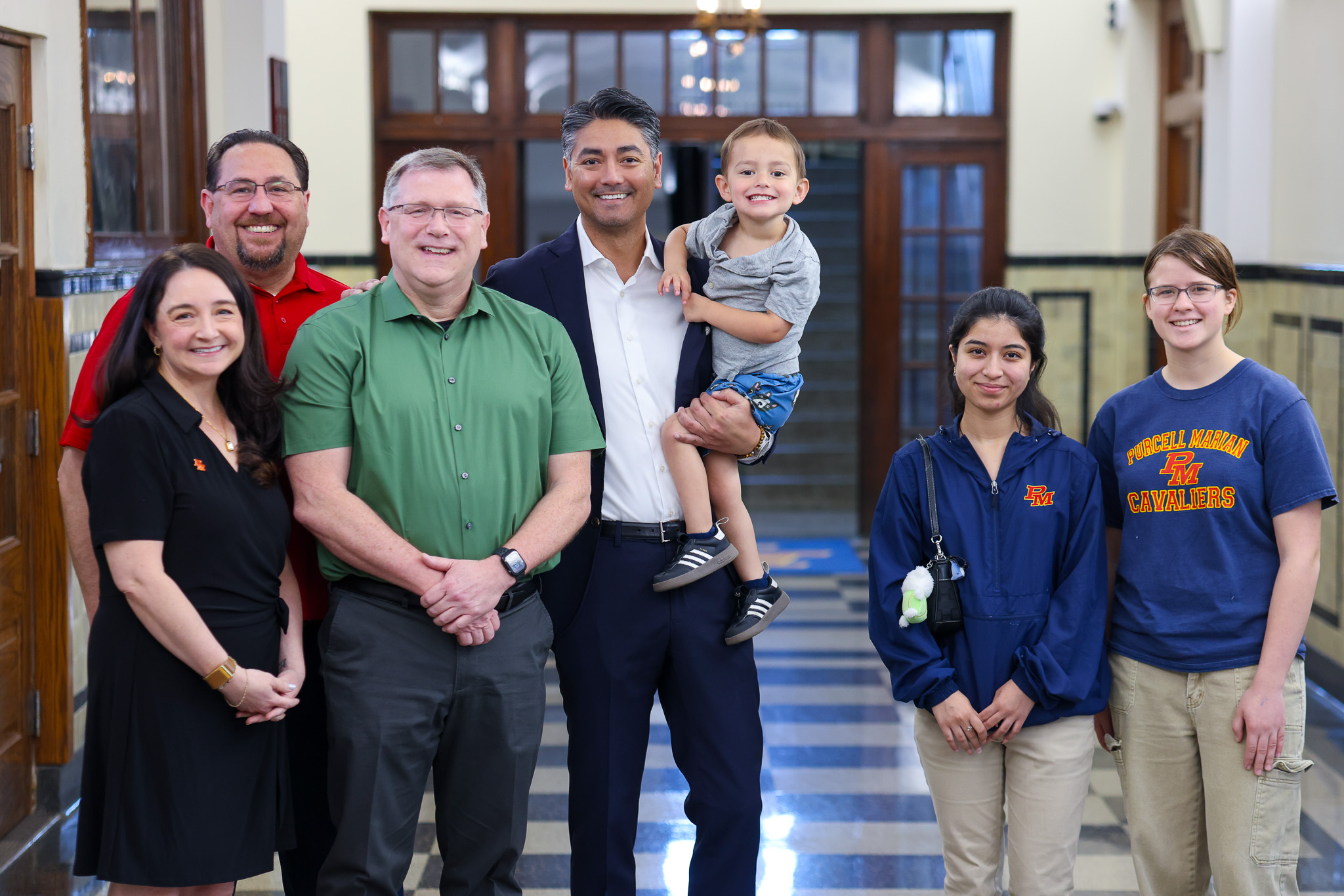
Theory of Knowledge is a cornerstone of the IB Diploma Programme and challenges students to examine how and why we know what we know. Through the exploration of different ways of knowing and perspectives, students develop critical thinking skills and learn to evaluate complex issues from multiple viewpoints. The visit served as a real-world extension of those classroom discussions.
A Personal Journey into Public Service
Mayor Pureval began by thanking the students for the invitation and expressing his appreciation for the purpose of the TOK course. He shared his personal and professional journey, reflecting on how his career path ultimately led him to local government. While he initially envisioned serving in a legislative role, he explained that he came to recognize the unique responsibilities of municipal leadership.
Throughout his remarks, Mayor Pureval emphasized the accountability and immediacy that accompany local government. Unlike broader legislative roles, he noted, city leaders are often expected to provide tangible solutions to challenges that directly affect residents' daily lives. He spoke about the complexity of issues facing communities and the importance of approaching those challenges with conviction, collaboration, and commitment to serving others.
Leading a Thoughtful Discussion
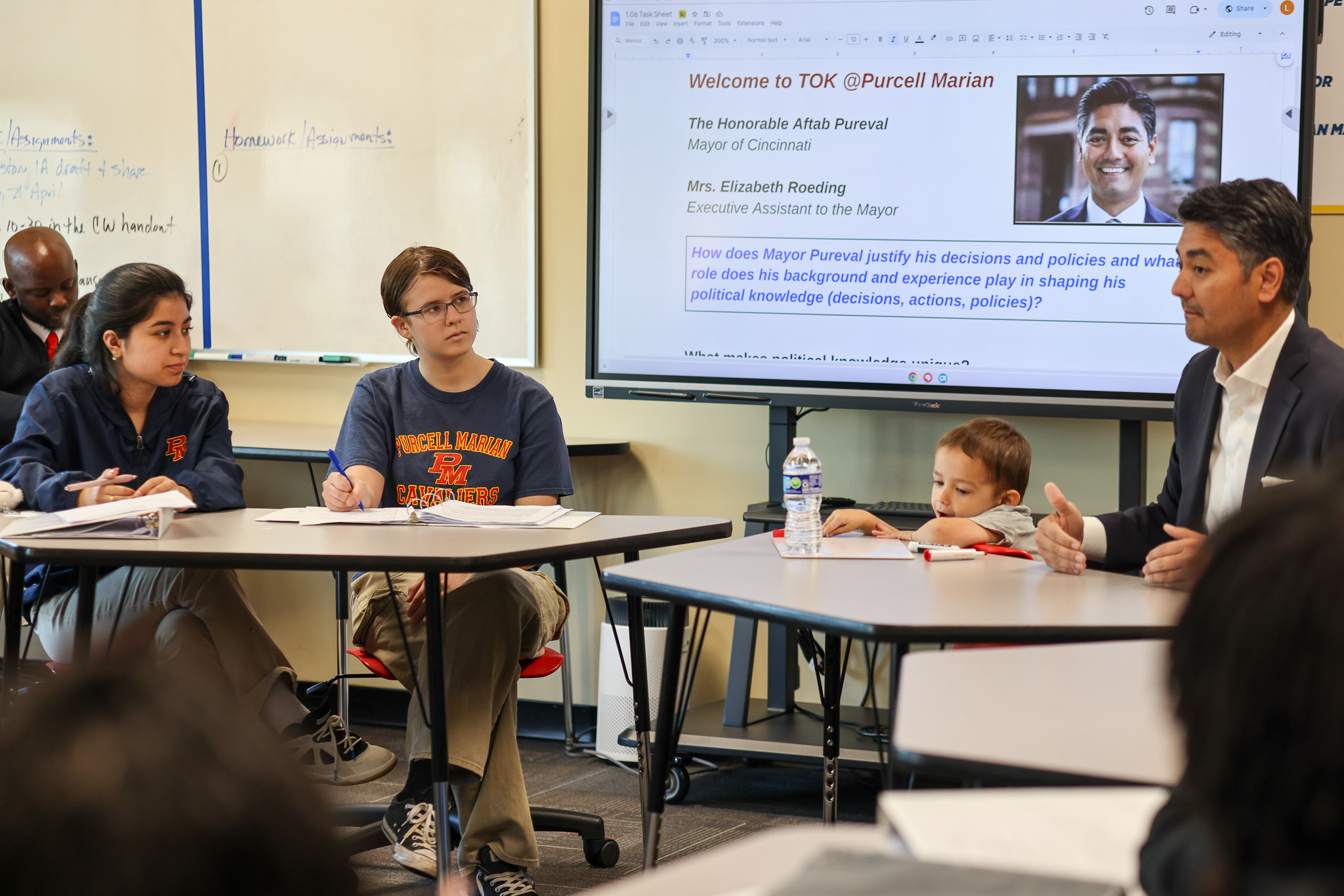
The discussion aligned naturally with the themes explored in Theory of Knowledge, particularly the role of perspective in decision-making. During a student-led question-and-answer session, seniors Dave Landrum and Ava Knobbe, along with Mr. Greer and other classmates, posed questions that encouraged the mayor to reflect on how leaders gather information, evaluate competing viewpoints, and communicate decisions.
When asked how he considers different perspectives while developing policy, Mayor Pureval described Cincinnati as a city made up of diverse neighborhoods, each with its own priorities and concerns. He explained that leadership often involves balancing the needs of the broader community with concerns about change while working to understand the viewpoints of those affected.
Students also explored how public leaders manage criticism and disagreement. Mayor Pureval highlighted the importance of community meetings, transparency, accessibility, and creating opportunities for honest dialogue. He noted that while people may disagree on solutions, those conversations often stem from a shared desire to improve their communities.
Learning Through Expertise and Collaboration
Ava Knobbe's questions focused on the process of continuous learning and decision-making. Mayor Pureval discussed the importance of surrounding oneself with knowledgeable individuals and being willing to admit when additional information is needed. He emphasized that effective leadership is not about having every answer, but about seeking expertise, listening carefully, and making informed decisions.
The conversation also touched on the value of engaging with differing viewpoints. Mayor Pureval shared that he often seeks input from individuals with contrasting perspectives and subject-matter expertise, allowing ideas and assumptions to be tested before decisions are made. The approach echoed one of the central goals of Theory of Knowledge: evaluating claims through multiple lenses before reaching conclusions.
Connecting Theory to Practice
Throughout the discussion, students explored themes central to the Theory of Knowledge curriculum, including perspective, expertise, bias, communication, and decision-making. The mayor's responses frequently returned to the importance of gathering information, considering multiple viewpoints, and remaining open to new understanding before reaching conclusions.
The visit offered students a valuable opportunity to connect classroom concepts with real-world leadership. By engaging directly with a public official and examining how knowledge and perspective influence decisions, TOK students experienced firsthand the type of thoughtful inquiry that defines the course.
Mayor Pureval concluded the visit by thanking the students for their insightful questions and expressing his appreciation to the faculty and staff for creating space for meaningful dialogue and learning.